
Ergon Bio STP Bio Evaporation Tank 6'25 ft
₹0.00 ₹60,000.00
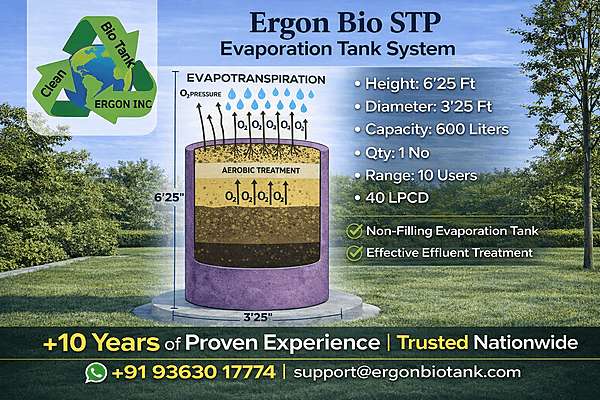
Treatment Process: Ergon Bio STP Evaporation Tank : 6'25 ft H Aerobic Oxidation – Effluent flows into evaporation tanks where residual organics are oxidized:
CO₂ + organic residues → CO₂ + H₂O + biomass
- Natural Evapotranspiration – Remaining water evaporates through vent stacks; no odor, no discharge.
System Configuration
| Parameter 50 LPCD | Specification 600 Liters Per Day |
|---|---|
| Tank Type | Ergon Bio STP Evaporation Tank |
| Tank Size | 6'25 ft H x 3'25 Dia - 600 LPCD |
| Operation | Passive (gravity flow, non-electric) |
| Area Required | 4'ft H x 4'ft B x 8' Depth |
| Material | RCC M25 Cylindrical Bio Tank |
| Design Life | >50 years |
| Maintenance | Ergon Bio Cleanser- |
Product Details
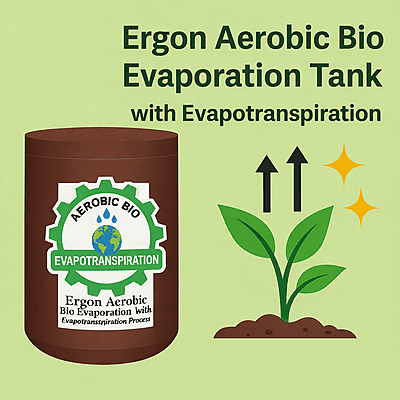
Eco-Certified Ergon Bio STP System Cylindrical Chamber
1️⃣ Product Overview Ergon Bio STP - Evaporation Tank
Product Name: Ergon Bio STP Evaporation Tank System , HSN Code: 6810Product Name: Ergon Bio Cleanser® HSN Code 3507Manufacturer: Ergon INC – Ergon Bio TankCategory: Secondary wastewater & aerobic biological pre- Wastewater treatment Additive chamber.✅ Odourless & Hygienic Treatment, ✅ Green Building Friendly-IGBC, ✅ Water Conservation Ready, ✅ Zero Energy Operation, ✅ Eco-Certified & Statutory Compliant, ✅ NIL Maintenance. ✅ No Chemicals / Additives — 100% biological treatment,✅ Designed for Bio Tank ,STP/ETP System, Support. ✅Zero-energy biological treatment. 2️⃣ Biological & Physical Processes Anaerobic & Aerobic - Evapotranspiration
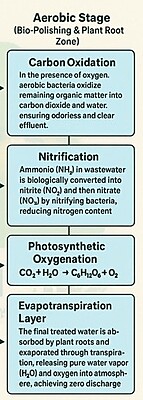
Ergon Bio Wastewater Treatment - Ergon Bio Tank SystemInflow & Mixing: Engineered inlet prevents backflow and distributes wastewater evenly Sedimentation – Delay Time Process: Gravity settling forms density zones with heavier organic solids at the baseActs as the first contact point for all sewage from domestic, commercial, or institutional plumbing systems. The Secondary Biological Aerobic & Evapotranspiration Bio-Natural Process is an advanced, energy-efficient wastewater polishing system designed to further treat pre-treated sewage or effluent after primary anaerobic digestion. This stage enhances water quality through natural aerobic microbial action combined with plant-based evapotranspiration, resulting in environmentally safe water reuse or zero-liquid-discharge performance. Heavy solids settle at the bottom while clarified liquid moves to the next treatment stage, improving overall system efficiency. c. Final Stage – Evapotranspiration (Zero Liquid Discharge). Treated water is released into engineered soil and plant Oxygen air pressure zones. Through evaporation and also plant transpiration, water safely returns to the atmosphere without surface discharge or groundwater contamination. - Aerobic Oxidation: Trace organics → CO₂ + H₂O → (H₂O (liquid) → H₂O (vapor) + O₂)
- Nitrification: NH₄⁺ → NO₂⁻ → NO₃⁻ → N₂ (gas)
- Evaporation: Liquid water → vapor via convection
- Degassing: Volatile gases safely released
- Polishing: Final BOD & COD reduction
📘 CPHEEO Manual (2013) – Section 12.7 & 12.7.3📘 IS 2470 (Part 2):1985 – Clause 6.23️⃣ Design & Technical Specifications Ergon Bio Tank System
- Tank Type: Primary Anaerobic & Secondary Aerobic pre-treatment Cylindrical Bio Tank
- Material: M25 Bio Concrete RCC Cylindrical Tank
- Operating Principle: Natural Gravity flow + Delay Time Digestion System + Natural Gravity
- Power Requirement: NIL (Natural Eco System) = Nil Output
- Design Life: > 50 years
- Capacity Range: Budget Bio Collection Tank - 1000 Liters ,Budget Bio Evaporation Tank - 600 Liters
- Maintenance: Periodic yearly Bio Cleanser Dosing - No Dewatering or Tank Maintenance.
- Chamber Zones: Inlet → Sedimentation → Digestion → Outlet.
- 4️⃣ Environmental & Government Acts (India) : Sewage Treatment Process
- Water (Prevention & Control of Pollution) Act, 1974 – Section 24(1)
- Environment (Protection) Act, 1986 – Schedule VI
- CPCB Effluent Discharge Standards – EPA 1986
- ISO 16075:2020 – Treated wastewater reuse guidelines
- NBC 2016 (Part 9) – Sustainable sanitation systems
- CPHEEO Manual (2013) – Section 12.7 & 12.7.3
- IS 2470 (Part 2):1985 – Clause 6.2
5️⃣ Biological & Physical Reaction Chain Anerobic Bacterial Process
Hydrolysis: Complex macromolecules → smaller organic molecules
Acidogenesis: Anaerobic fermentation → volatile fatty acids
Acetogenesis: Fats & sugars → acetate + H₂
Methanogenesis: Final digestion → CH₄ + CO₂ + water
Outcome: Partial stabilization of wastewater and significant reduction of organic load before secondary treatment.- Bacterial Strains: Bacillus, Pseudomonas, Clostridium, Methanothrix
- Primary Enzymes: Protease, Lipase, Amylase, Cellulase, Esterase
- Odor Control: Converts H₂S & NH₃ into stable, non-odorous salts
- Biofilm Formation: Prevents scum and sludge accumulation
- pH Stability: Maintains optimum range of 6.8 – 7.4
- Biodegradability: 100% natural & non-toxic
6️⃣ Eco-Friendly & Sustainability Benefits
✅ Eco-Certified Compliance: Conforms to NBC 2016, CPHEEO, NGT & MoHUA guidelines, supporting green building certifications.
💧 Water Conservation: Stabilized effluent enables reuse for gardening, flushing, and on-site water balancing.
🌍 Carbon Neutral Potential: Avoids uncontrolled methane emissions common in conventional septic tanks.
🚫 Zero Chemical Dependency: Relies entirely on natural microbial action, preventing toxic groundwater contamination.
📉 Minimal Energy Footprint: Zero electricity operation and on-site treatment eliminate transport-related emissions.
♻️ Sludge Reduction: High biological consumption minimizes solids, reducing vacuum tanker dependency.7️⃣ Government Norms & Compliance Mapping
CPHEEO Manual (2013), Section 12.3: ✔ Primary Anaerobic treatment provided.CPHEEO Manual (2013), Section 12.4: ✔ Secondary Aerobic & Evapotranspiration treatment provided.BIS – IS 2470 (Part 1):1985, Clause 4.2: ✔ Anaerobic digestion of settled solids.BIS – IS 2470 (Part 2):1985, Clause 6.2: ✔ Effluent Disposal.CPHEEO Manual (2013), Section 12.7: ✔ Land /ET Disposal.CPHEEO Manual (2013) – Biological sewage treatment.NBC 2016 (Part 9): ✔ Sustainable onsite sanitation compliant.
NGT / MoHUA: ✔ Decentralized, eco-friendly wastewater management.
CPCB Schedule VI: ✔ Effluent prepared to meet discharge norms after full treatment – EPA 1986 (BOD ≤ 30 mg/L) Water (Prevention & Control of Pollution) Act, 1974 – Section 24. IGBC Net Zero Water – Biological treatment support. ✅ Conclusion: The Ergon Budget Bio Collection Tank is a future-ready, eco-certified wastewater solution designed for residential, commercial, institutional, and green building projects. Raw sewage and wastewater are collected in a sealed anaerobic chamber, where oxygen-free biological digestion begins immediately—stabilizing organic waste, eliminating odour, and reducing pollutant load at the source. “The Ergon Elite Bio Collection Tank achieves primary wastewater stabilization through a controlled anaerobic reaction chain—hydrolysis, acidogenesis, acetogenesis, and methanogenesis—fully compliant with CPHEEO (2013), IS 2470 (Part 1):1985, NBC-2016, and IGBC Net Zero Water standards.”
1️⃣ Product Overview Ergon Bio STP - Evaporation Tank
Product Name: Ergon Bio STP Evaporation Tank System , HSN Code: 6810
Product Name: Ergon Bio Cleanser® HSN Code 3507
Manufacturer: Ergon INC – Ergon Bio Tank
Category: Secondary wastewater & aerobic biological pre- Wastewater treatment Additive chamber.
✅ Odourless & Hygienic Treatment, ✅ Green Building Friendly-IGBC, ✅ Water Conservation Ready, ✅ Zero Energy Operation, ✅ Eco-Certified & Statutory Compliant, ✅ NIL Maintenance. ✅ No Chemicals / Additives — 100% biological treatment,✅ Designed for Bio Tank ,STP/ETP System, Support. ✅Zero-energy biological treatment.
2️⃣ Biological & Physical Processes Anaerobic & Aerobic - Evapotranspiration
Ergon Bio Wastewater Treatment - Ergon Bio Tank System
Inflow & Mixing: Engineered inlet prevents backflow and distributes wastewater evenly Sedimentation – Delay Time Process: Gravity settling forms density zones with heavier organic solids at the base
Acts as the first contact point for all sewage from domestic, commercial, or institutional plumbing systems.
The Secondary Biological Aerobic & Evapotranspiration Bio-Natural Process is an advanced, energy-efficient wastewater polishing system designed to further treat pre-treated sewage or effluent after primary anaerobic digestion. This stage enhances water quality through natural aerobic microbial action combined with plant-based evapotranspiration, resulting in environmentally safe water reuse or zero-liquid-discharge performance. Heavy solids settle at the bottom while clarified liquid moves to the next treatment stage, improving overall system efficiency. c. Final Stage – Evapotranspiration (Zero Liquid Discharge). Treated water is released into engineered soil and plant Oxygen air pressure zones. Through evaporation and also plant transpiration, water safely returns to the atmosphere without surface discharge or groundwater contamination.
- Aerobic Oxidation: Trace organics → CO₂ + H₂O → (H₂O (liquid) → H₂O (vapor) + O₂)
- Nitrification: NH₄⁺ → NO₂⁻ → NO₃⁻ → N₂ (gas)
- Evaporation: Liquid water → vapor via convection
- Degassing: Volatile gases safely released
- Polishing: Final BOD & COD reduction
📘 CPHEEO Manual (2013) – Section 12.7 & 12.7.3
📘 IS 2470 (Part 2):1985 – Clause 6.2
3️⃣ Design & Technical Specifications Ergon Bio Tank System
- Tank Type: Primary Anaerobic & Secondary Aerobic pre-treatment Cylindrical Bio Tank
- Material: M25 Bio Concrete RCC Cylindrical Tank
- Operating Principle: Natural Gravity flow + Delay Time Digestion System + Natural Gravity
- Power Requirement: NIL (Natural Eco System) = Nil Output
- Design Life: > 50 years
- Capacity Range: Budget Bio Collection Tank - 1000 Liters ,Budget Bio Evaporation Tank - 600 Liters
- Maintenance: Periodic yearly Bio Cleanser Dosing - No Dewatering or Tank Maintenance.
- Chamber Zones: Inlet → Sedimentation → Digestion → Outlet.
- 4️⃣ Environmental & Government Acts (India) : Sewage Treatment Process
- Water (Prevention & Control of Pollution) Act, 1974 – Section 24(1)
- Environment (Protection) Act, 1986 – Schedule VI
- CPCB Effluent Discharge Standards – EPA 1986
- ISO 16075:2020 – Treated wastewater reuse guidelines
- NBC 2016 (Part 9) – Sustainable sanitation systems
- CPHEEO Manual (2013) – Section 12.7 & 12.7.3
- IS 2470 (Part 2):1985 – Clause 6.2
5️⃣ Biological & Physical Reaction Chain Anerobic Bacterial Process
Hydrolysis: Complex macromolecules → smaller organic molecules
Acidogenesis: Anaerobic fermentation → volatile fatty acids
Acetogenesis: Fats & sugars → acetate + H₂
Methanogenesis: Final digestion → CH₄ + CO₂ + water
Outcome: Partial stabilization of wastewater and significant reduction of organic load before secondary treatment.
Acidogenesis: Anaerobic fermentation → volatile fatty acids
Acetogenesis: Fats & sugars → acetate + H₂
Methanogenesis: Final digestion → CH₄ + CO₂ + water
Outcome: Partial stabilization of wastewater and significant reduction of organic load before secondary treatment.
- Bacterial Strains: Bacillus, Pseudomonas, Clostridium, Methanothrix
- Primary Enzymes: Protease, Lipase, Amylase, Cellulase, Esterase
- Odor Control: Converts H₂S & NH₃ into stable, non-odorous salts
- Biofilm Formation: Prevents scum and sludge accumulation
- pH Stability: Maintains optimum range of 6.8 – 7.4
- Biodegradability: 100% natural & non-toxic
6️⃣ Eco-Friendly & Sustainability Benefits
✅ Eco-Certified Compliance: Conforms to NBC 2016, CPHEEO, NGT & MoHUA guidelines, supporting green building certifications.
💧 Water Conservation: Stabilized effluent enables reuse for gardening, flushing, and on-site water balancing.
🌍 Carbon Neutral Potential: Avoids uncontrolled methane emissions common in conventional septic tanks.
🚫 Zero Chemical Dependency: Relies entirely on natural microbial action, preventing toxic groundwater contamination.
📉 Minimal Energy Footprint: Zero electricity operation and on-site treatment eliminate transport-related emissions.
♻️ Sludge Reduction: High biological consumption minimizes solids, reducing vacuum tanker dependency.
🌍 Carbon Neutral Potential: Avoids uncontrolled methane emissions common in conventional septic tanks.
🚫 Zero Chemical Dependency: Relies entirely on natural microbial action, preventing toxic groundwater contamination.
📉 Minimal Energy Footprint: Zero electricity operation and on-site treatment eliminate transport-related emissions.
♻️ Sludge Reduction: High biological consumption minimizes solids, reducing vacuum tanker dependency.
7️⃣ Government Norms & Compliance Mapping
CPHEEO Manual (2013), Section 12.3: ✔ Primary Anaerobic treatment provided.
CPHEEO Manual (2013), Section 12.4: ✔ Secondary Aerobic & Evapotranspiration treatment provided.
BIS – IS 2470 (Part 1):1985, Clause 4.2: ✔ Anaerobic digestion of settled solids.
BIS – IS 2470 (Part 2):1985, Clause 6.2: ✔ Effluent Disposal.
CPHEEO Manual (2013), Section 12.7: ✔ Land /ET Disposal.
CPHEEO Manual (2013) – Biological sewage treatment.
NBC 2016 (Part 9): ✔ Sustainable onsite sanitation compliant.NGT / MoHUA: ✔ Decentralized, eco-friendly wastewater management.
CPCB Schedule VI: ✔ Effluent prepared to meet discharge norms after full treatment – EPA 1986 (BOD ≤ 30 mg/L) Water (Prevention & Control of Pollution) Act, 1974 – Section 24. IGBC Net Zero Water – Biological treatment support.
✅ Conclusion: The Ergon Budget Bio Collection Tank is a future-ready, eco-certified wastewater solution designed for residential, commercial, institutional, and green building projects. Raw sewage and wastewater are collected in a sealed anaerobic chamber, where oxygen-free biological digestion begins immediately—stabilizing organic waste, eliminating odour, and reducing pollutant load at the source. “The Ergon Elite Bio Collection Tank achieves primary wastewater stabilization through a controlled anaerobic reaction chain—hydrolysis, acidogenesis, acetogenesis, and methanogenesis—fully compliant with CPHEEO (2013), IS 2470 (Part 1):1985, NBC-2016, and IGBC Net Zero Water standards.”